
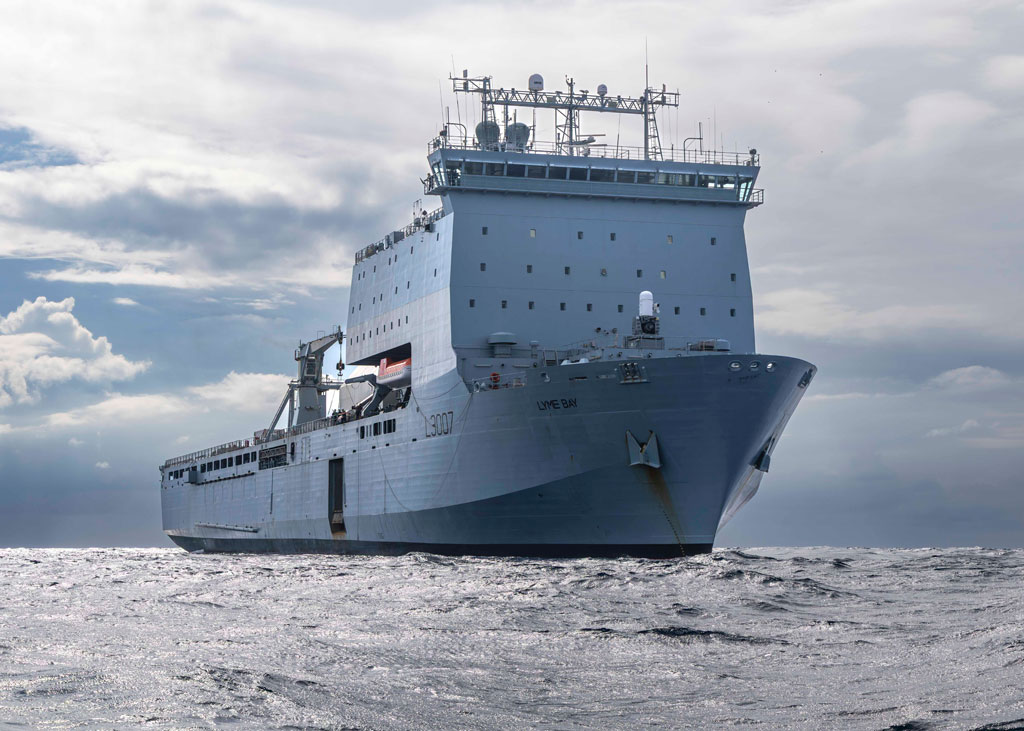
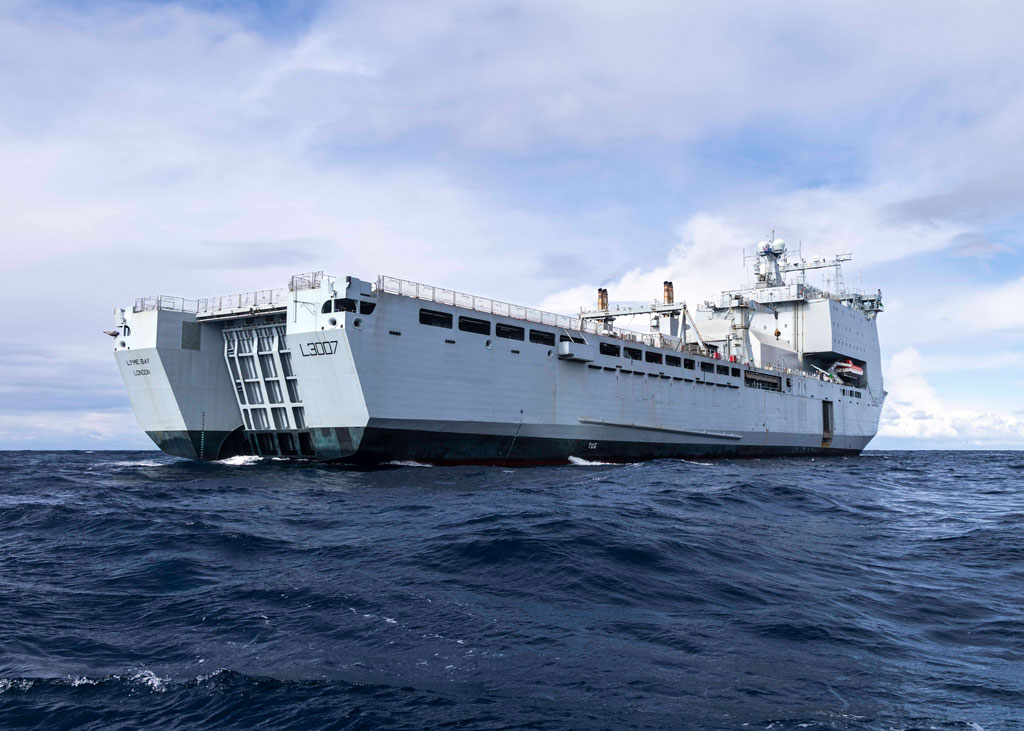
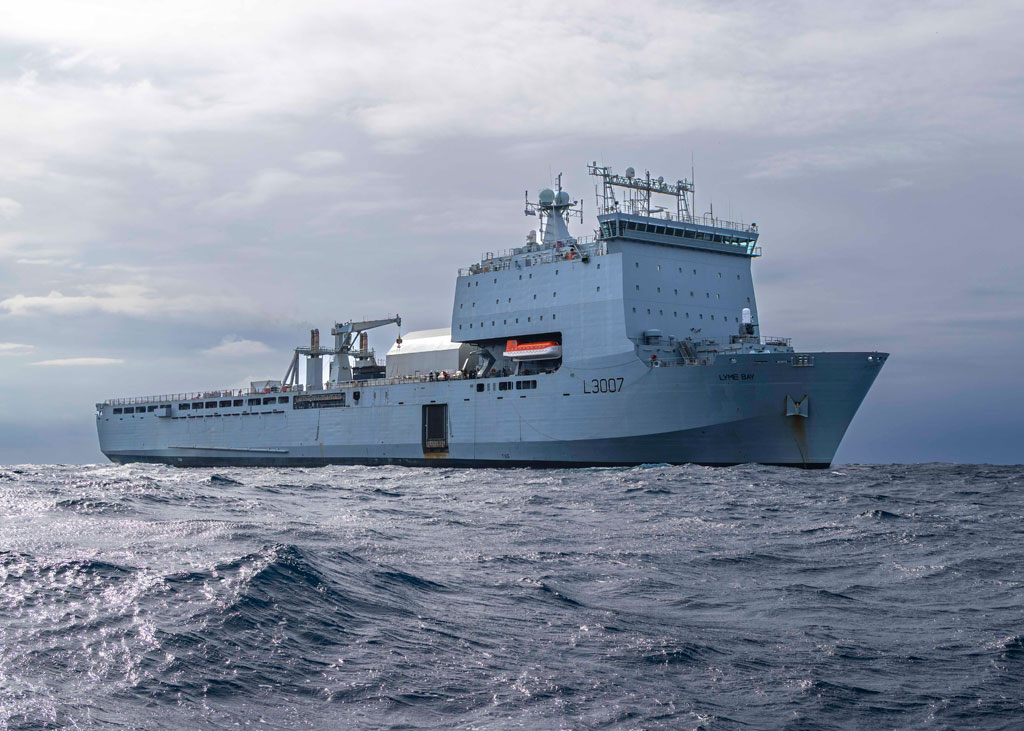
Royal Navy support ship RFA Lyme Bay arrives in Cyprus today following intensive training in the Mediterranean for a potential mission in the Strait of Hormuz.
Packed with some of the most advanced autonomous and remote-controlled minehunting equipment in the world, plus around 100 expert mine war/diving personnel, the ship sailed from Gibraltar a couple of weeks ago.
Whether part of the 60-or-so Royal Fleet Auxiliary ship’s company who run Lyme Bay, or the embarked forces who provide the mine warfare expertise, all were tested thoroughly – especially given the likelihood of being in harm’s way operating in one of the most volatile places on the planet.
The training – dealing with fires, flood, breakdowns, power failures, treating (mock) casualties – has been delivered by a team of Royal Navy/RFA specialists from Plymouth, who mentored and assessed to bring all aboard up to the highest levels of readiness as the various scenarios built up in intensity.
“It’s testing, it’s realistic, but I am really pleased at how everyone has pulled together,” Lyme Bay’s second-in-command Chief Officer Steven McCubbin said.
First Officer Paul Creek RFA, one of the sailors from the Navy’s FOST organisation delivering the training, added: “It has been nice to see how the ship’s company have really engaged and executed effective
training which has resulted in strong progression.”
With destroyer HMS Dragon, which is already in the Indian Ocean, RFA Lyme Bay will play a central role in any future multinational effort to safeguard freedom of navigation in the Strait of Hormuz.
The ship spent several weeks in Gibraltar being modified for its mine warfare mothership mission – traditionally she has supported Royal Marines amphibious operations.
She is conducting a crew change, taking on supplies and embarking extra mine warfare specialists in Limassol.
UK MOD © Crown copyright
